Tower Rush – What players think about it in 2026
Tower Rush Evaluation 2026 - Opinions and Ratings
This article is a structured synthesis of those opinions. Not my opinion about the game — the opinions of the players, organized and rated by criteria.
Compiled rating: 4.2 / 5 ★★★★☆
Based on the overall trend of the collected testimonies. Tower Rush scores well in mechanics, RTP, and the demo. It scores lower in visual variety and the absence of auto-cashout. It’s a good score with honest caveats — exactly what is expected from a well-made crash game.
Rating by criteria — score by score
Instead of a single score, I divided the evaluation into six criteria. Each reflects a different dimension of the experience, and the scores vary considerably among them.
Multi-criteria ranking table:
| Criterion | Score | Summary justification |
|---|---|---|
| Game mechanics | 4,6 / 5 | The manual placement of blocks is unique in the category and consistently praised |
| RTP and transparency | 4,4 / 5 | 96-97% is competitive; Provably Fair allows for individual verification |
| Free demo | 4,5 / 5 | Complete, without registration, identical to the real mode — among the best on the market |
| Visual experience | 3,2 / 5 | Functional but repetitive; lacks variety of scenarios and animations |
| Integrated bonuses | 3,8 / 5 | Well designed when they appear, but too rare |
| Mobile experience | 4,3 / 5 | Fluid HTML5, well-sized buttons, native portrait mode |
| Weighted average | 4,2 / 5 |
The discrepancy between the mechanics (4.6) and the visual experience (3.2) is the most revealing data. Tower Rush is an excellent game to play — but not particularly stimulating to look at. It’s a tension that defines the experience: high mechanical intensity, low aesthetic variety.
What players praise the most
Praise #1 — The active control over the outcome
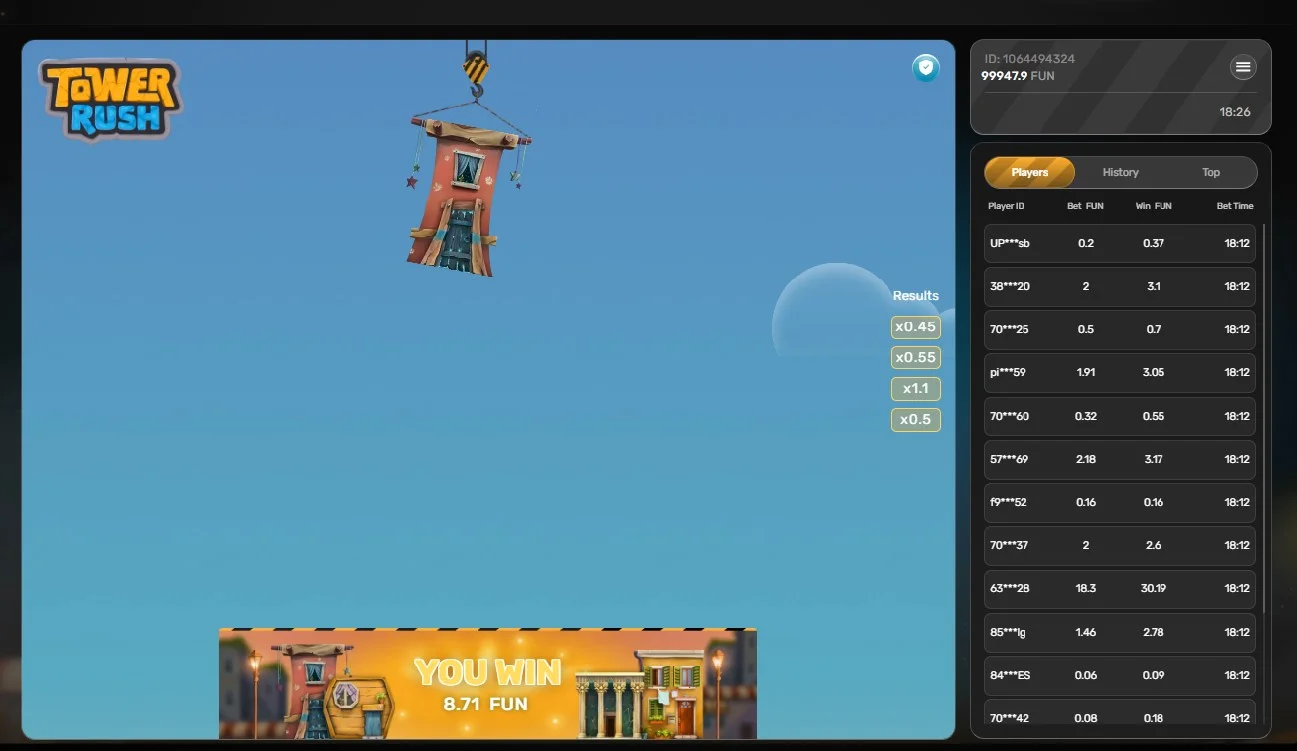
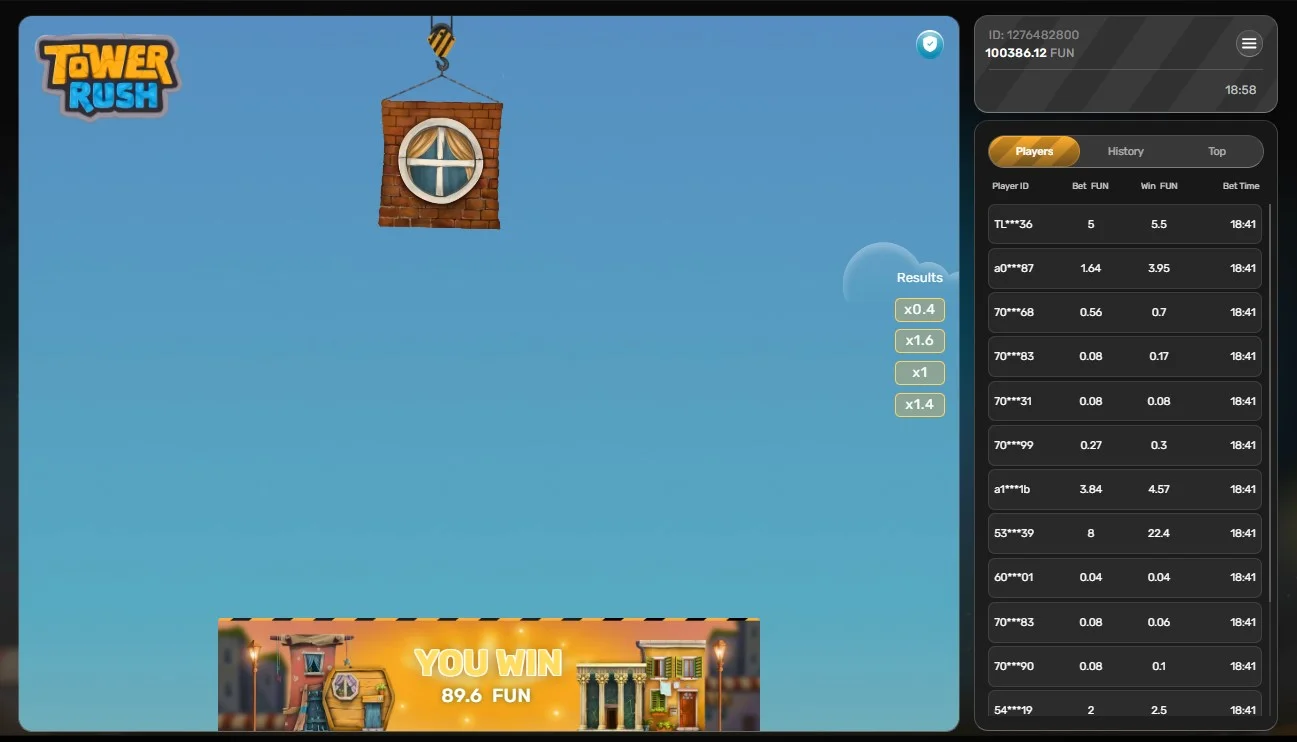
The most frequent observation, by far. Players value that Tower Rush is not limited to "watching and deciding when to cash out" (like Aviator). The act of placing each block manually creates a sense of participation that no other crash game offers. Several players use the word "skill" — with the correct caveat that the RNG still dominates the overall outcome. But the perception of control is real and positive.
Praise #2 — The demo as a serious tool
The Tower Rush demo receives consistent praise. No registration, no tricks, mechanics identical to the real one. But what players value the most is not convenience — it’s utility. In a passive crash game, the demo teaches the interface in 20 seconds. In Tower Rush, the demo teaches your cashout point, your timing, and your precision limits. This functional difference is recognized and appreciated.
Praise #3 — The short session format
Rounds of 10 to 45 seconds. Complete sessions in 15 minutes. Immediate decisions and instant results. For players who want concentrated intensity — during lunch breaks, on public transport, before sleeping — Tower Rush fits perfectly. It’s the crash game for those with little time who want that time to count.
What players criticize the most
Criticism #1 — The visual monotony
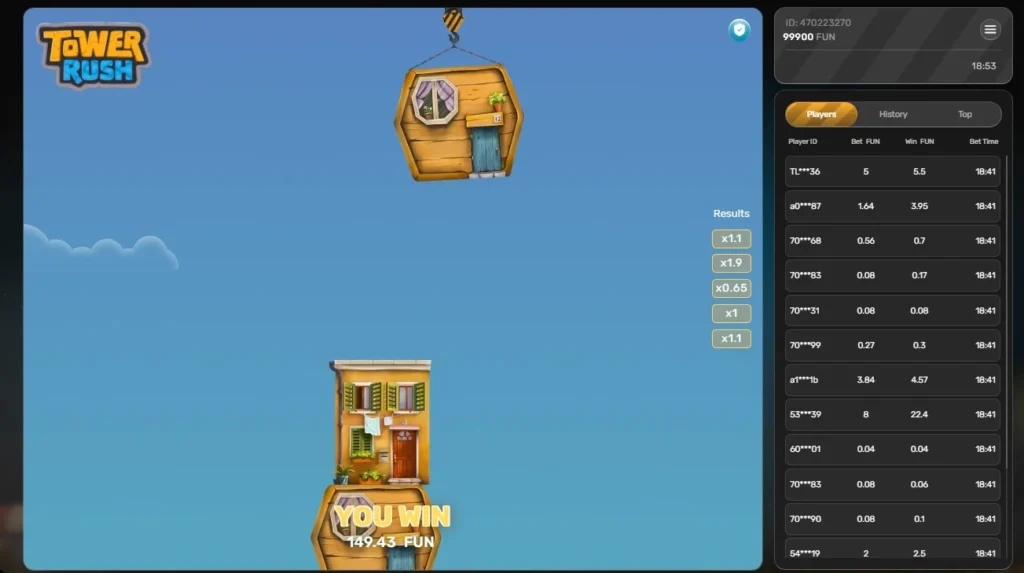
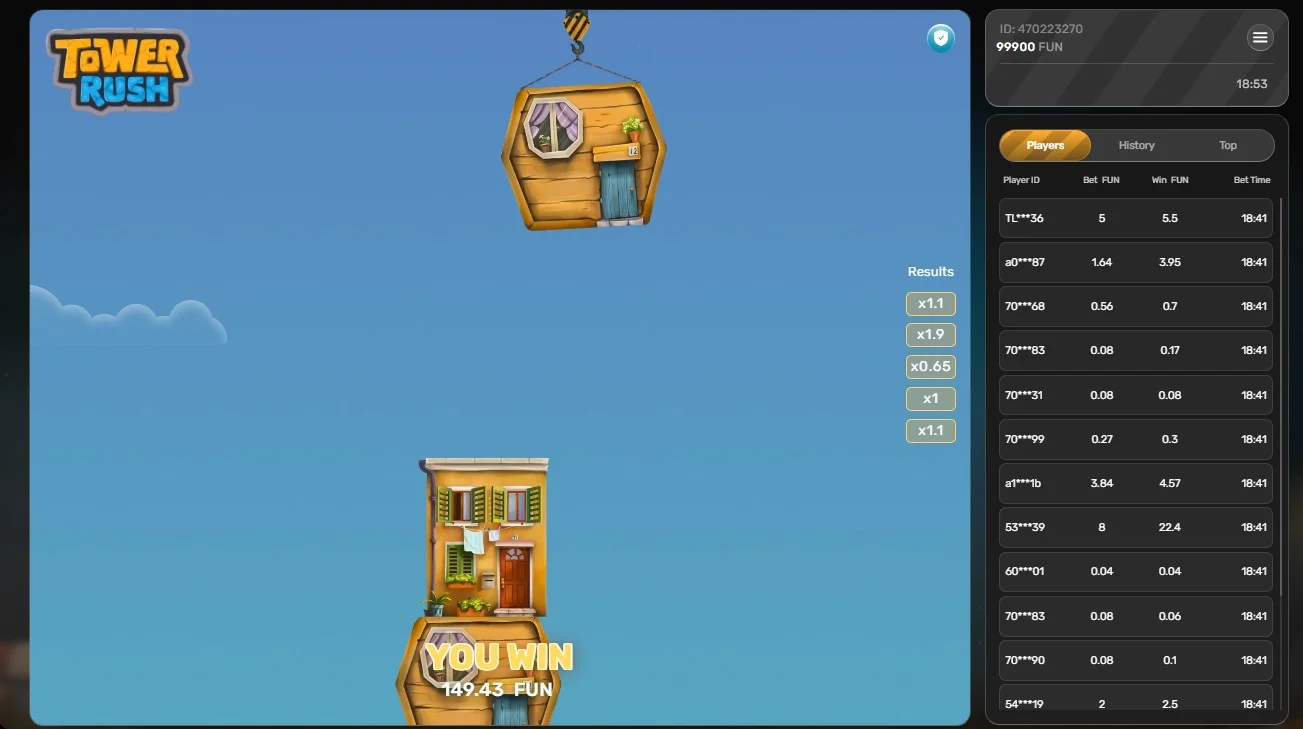
Identical blocks, identical background, repetitive animation. After 20-25 minutes, several players report visual saturation. It’s not a serious flaw — Tower Rush does not aim to be a AAA game — but it limits session duration in a way that goes beyond mental fatigue. The most common suggestion: variations in scenery or block style by difficulty level.
Criticism #2 — Absence of auto-cashout
Players coming from Aviator (where the feature exists) miss a programmable automatic cashout. The argument: when you already know you want to exit at x7, having to click manually introduces an unnecessary risk of human error — especially on mobile, especially under stress. Galaxsys does not offer this feature, probably by design (the game is made to be manual), but the absence is noted.
Criticism #3 — Frequency of integrated bonuses
Frozen Floor, Temple Floor, and Triple Build are appreciated when they appear — but they appear rarely. A maximum of one each per session, with odds that leave many sessions without any bonus. Players who structure part of their strategy around bonuses often become frustrated. Most eventually learn to treat them as pleasant surprises, not as predictable components.
Themes that divide opinions
High volatility — blessing or curse?
For players with a comfortable bankroll, high volatility is a source of excitement — the swings create adrenaline and memorable moments. For players with a limited budget, it is a source of frustration — five consecutive rounds that end early can consume a significant portion of the balance. Both perspectives are valid. Volatility is a feature, not a flaw — but it affects different players in opposite ways.
The skill component — real or illusory?
Tower Rush requires manual timing — that is factual. But the RNG determines the difficulty of each floor — which means that mechanically difficult rounds exist regardless of the player's level. The emerging consensus: there is an execution component that makes a difference (timing of the click), but the contribution of skill to the final outcome is minor compared to the RNG. It is enough to make the experience more engaging, but not enough to "win" the game consistently.
Player profiles — who stays and who leaves
The player who stays with Tower Rush:
→ Prefers short and intense sessions (10-20 minutes)
→ Likes to have active control over each round
→ Accepts high volatility and its consequences
→ Used the demo to calibrate before depositing
→ Does not rely on casino bonuses to enjoy the experience
→ Treats Tower Rush as a complement to daily life, not as the main activity
The player who abandons Tower Rush:
→ Seeks visual variety and long sessions
→ Wants programmable auto-cashout
→ Has a very limited bankroll and struggles with short round series
→ Counts on integrated bonuses as part of the strategy
→ Prefers passive crash games where they can relax
Tower Rush vs competition — how players compare
| Game | Perceived advantage | Perceived disadvantage |
|---|---|---|
| Tower Rush | Active mechanics, feeling of control | Visually repetitive, no auto-cashout |
| Aviator | Simple, relaxing, auto-cashout | Passive, less engaging after weeks |
| Spaceman | Polished interface, pleasant visuals | Mechanics identical to Aviator |
| JetX | Double simultaneous bet | Less immersive than Tower Rush |
The most frequent comparison is Tower Rush vs Aviator — they are the two most popular crash games and represent opposite approaches. Aviator is the crash game for those who want to relax. Tower Rush is the crash game for those who want to be present. Neither is objectively better — they are different experiences for different moments.
Technical sheet
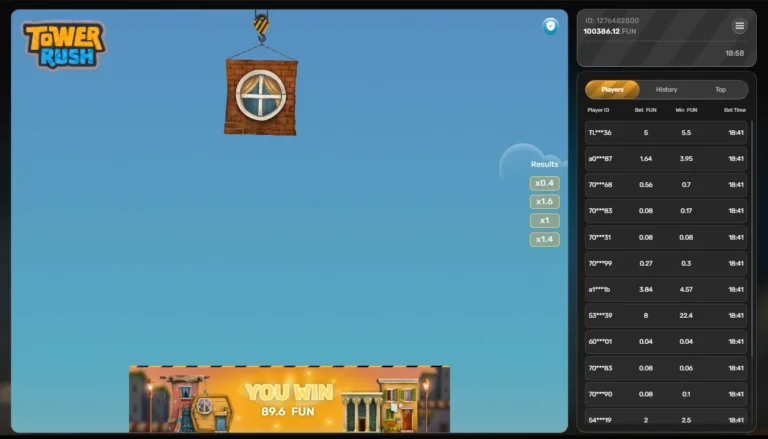
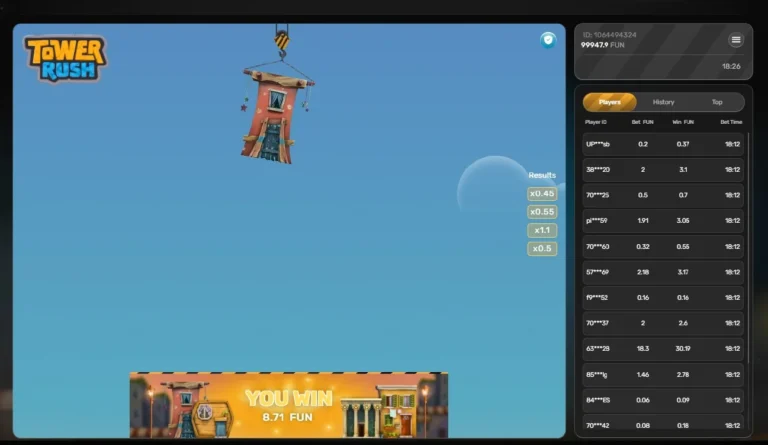
The demo and the bonuses — what players prefer
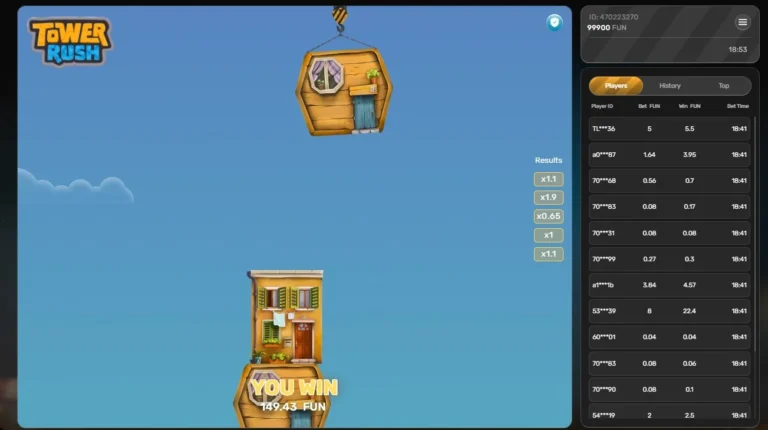
In the collected testimonials, a clear trend: the most satisfied players are those who spent time in the demo before depositing. The magic number seems to be 30-50 rounds — enough to calibrate timing and discover the natural cashout point. Those who skipped this stage report more frequently frustrating initial sessions and quickly depleted deposits.
As for casino bonuses, opinions are predictably divided. Players who calculated the wagering before activating report neutral to positive experiences. Players who activated without reading the terms report frustration — especially when the contribution of crash games is less than 100%. Weekly cashback is consistently preferred over the welcome bonus by regular players: no wagering, no deadlines, no distortion of gambling behavior.
What players say about session management
A recurring theme in the collected opinions: the importance of short sessions. Tower Rush requires continuous attention — each round is a sequence of active decisions, not passive observation. Players who report the best experiences limit themselves to 15-20 minutes per session. Those who exceed this limit report an increase in timing errors, impulsive cashout decisions, and a tendency to raise bets in a "recovery" pattern that rarely works.
Three practices that emerge from the most positive testimonials: fixed bet of 2-3% of the balance throughout the session, cashout defined before each round (not during), and strict closure when the time limit is reached — even in a positive session. This discipline does not guarantee winnings, but protects against the most destructive decisions that come with fatigue and excitement.
Selection of representative opinions
Frequently asked questions
Where do these ratings come from?
Is the rating of 4.2/5 reliable?
Has Tower Rush improved in 2026?
What is the criterion with the lowest rating?
What is the criterion with the highest rating?
Is the demo really free and unlimited?
What is the best bonus for Tower Rush according to players?

Rodrigo Pereira
iGaming Analyst & Community Behavior Specialist
Conclusion — what 2026 says about Tower Rush
The summary in three sentences:
Tower Rush is the most engaging crash game on the market in terms of mechanics. The visual experience needs investment. And the score of 4.2/5 reflects exactly that — a game with an excellent core and a packaging that could be better.
If you are interested in a crash game that requires real attention, Tower Rush is the best option available in 2026. If you are interested in a beautiful and relaxing crash game, look elsewhere. And if you are not sure, the demo is there — free, complete, no commitments. Let the experience speak for you.
Responsible gaming: Tower Rush is chance-based entertainment with a mathematical advantage for the casino. Set limits before each session. SRIJ: www.srij.turismodeportugal.pt.